17.06.2026
Elisabet Boehm and the beginnings of the rural women’s movement
Contact person
Gabriele Blömker
02501 801-1670
gabriele.bloemker@lv.de
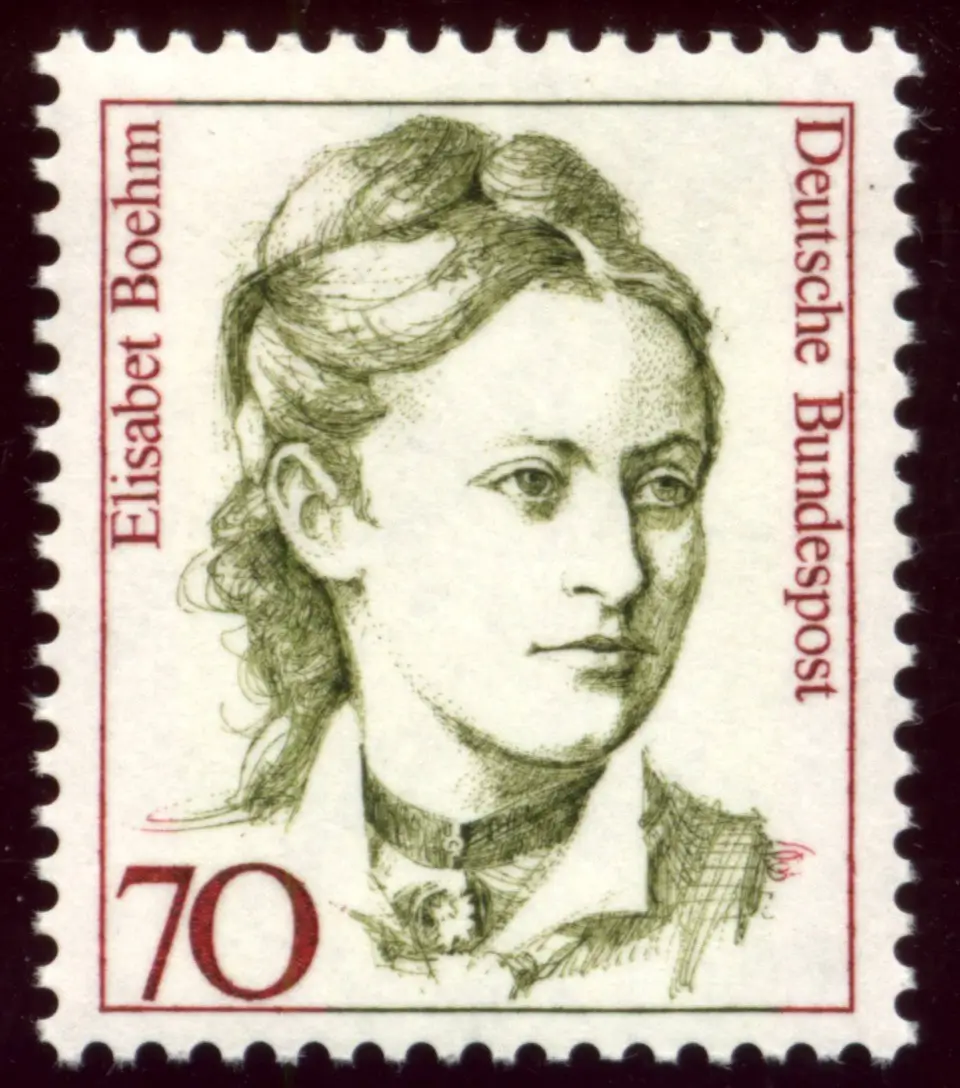
Deutsche Post has paid a small but striking tribute to Elisabet Boehm in its ‘Famous Women’ stamp series.
Photo: Imago/Schöning
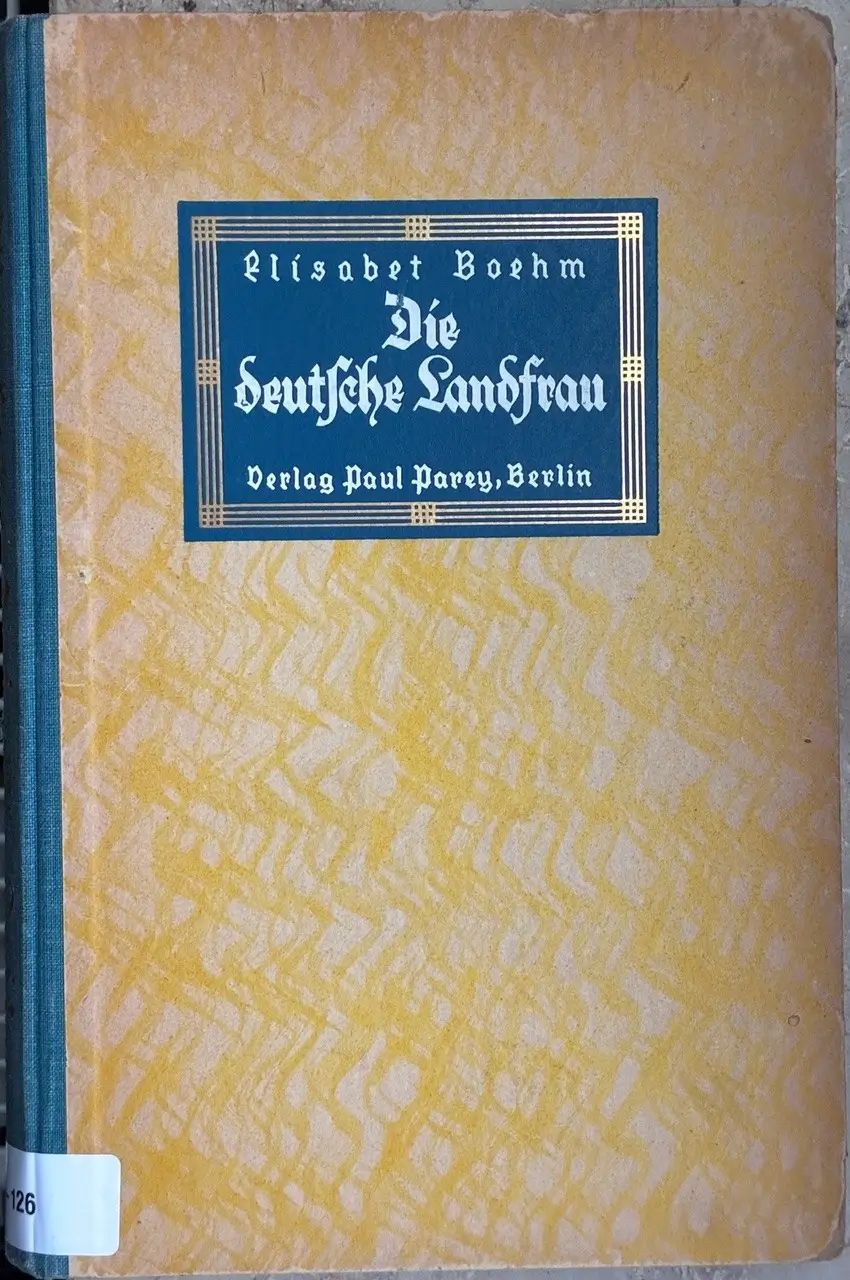
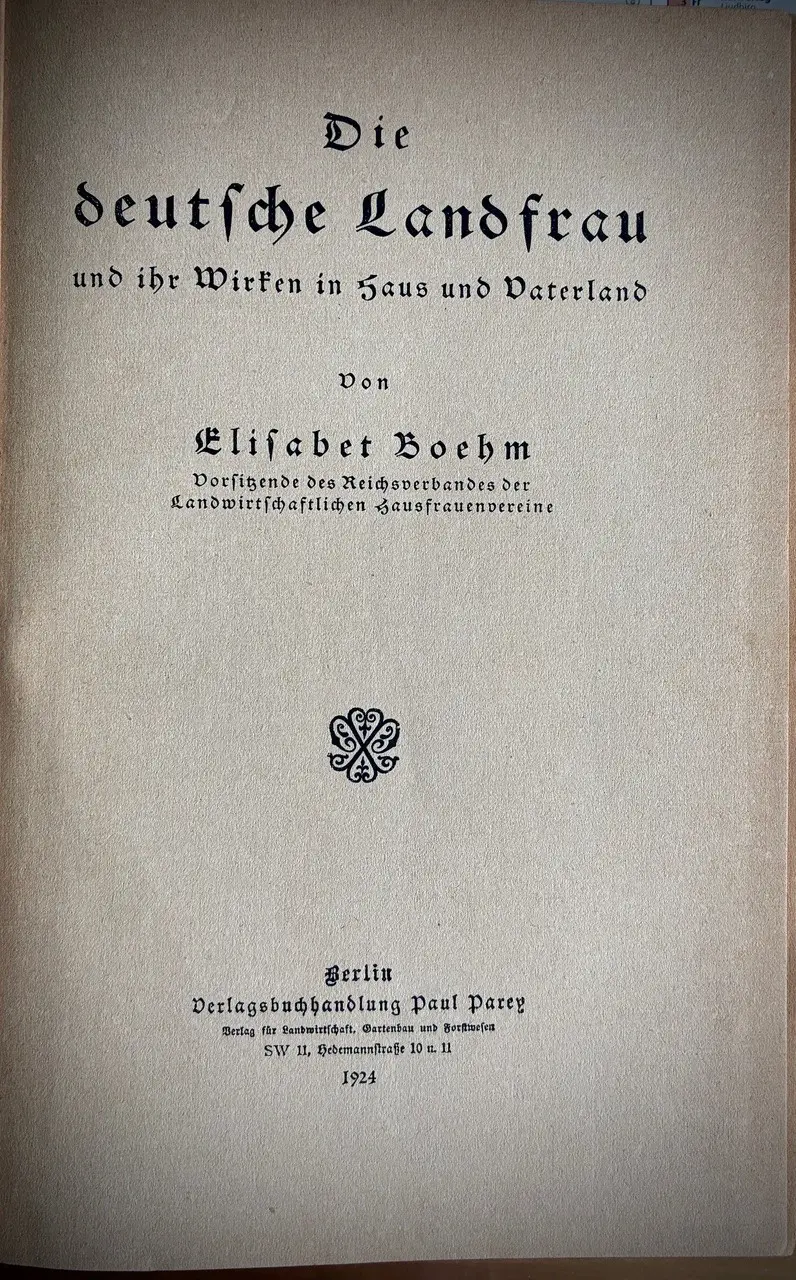
The UN has declared 2026 the ‘International Year of Women in Agriculture’. One name in particular stands out as the figurehead of the early rural women’s movement in Germany: Elisabet Boehm (1859–1943). Just over 100 years ago, she published the manifesto *Die deutsche Landfrau* (The German Rural Woman).
The book begins with a powerful statement: “What mighty things man has created over the course of millennia! ... And woman? What has woman conceived and achieved in all these millennia?”
This is the question posed by Elisabet Boehm (1859–1943) more than 100 years ago in her book *Die deutsche Landfrau und ihr Wirken in Haus und Vaterland* (The German Country Woman and Her Work in Home and Fatherland). The book, published in Berlin in 1924, is held in the ‘Westfälische Bibliothek der Landwirtschaft’ (Westphalian Library of Agriculture) of the Stiftung Landwirtschaftsverlag in Münster-Hiltrup and is a telling testament to the early days of the rural women’s organisation in Germany.
The author, Elisabeth Boehm, a landowner’s wife in East Prussia, had already founded Germany’s first ‘Agricultural Housewives’ Association’ in 1898, with many more to follow. In 1915, these associations merged to form the ‘Reichsverband der Landwirtschaftlichen Hausfrauenvereine’ (Reich Association of Agricultural Housewives’ Associations), which Boehm led until 1929.
‘A good vocational education as the first step’
It is no coincidence that ‘home economics’ features prominently in the society’s name. In Boehm’s view, women in rural areas lacked basic knowledge in this very area – ‘we women were muddling through, each on her own, without knowledge or direction’, she later wrote in retrospect. In her book, she advises her readers to ‘become a person of character, and the first step towards this is a good vocational education’.
She particularly urges her readers to take up poultry farming, beekeeping or fruit-growing. Further chapters take a ‘stroll through the garden’, look at bookkeeping or focus on the role of the rural woman as a trainer. Boehm describes both the ‘poetry of spring cleaning’ and a ‘duty to lead’, and asks: “How do we become capable of carrying out social work?”
In her book, Boehm advocates for the systematic establishment of specialised vocational schools, which were still virtually non-existent for rural women at the time. She also calls for chairs in home economics at the country’s universities. Furthermore, she argues that “a practical training programme in rural home economics” should be developed.
As a second major task, Boehm recommends that rural women organise themselves. “For much of what needs to be achieved by rural women can only be achieved through the association of rural women, through a shared endeavour, through a shared will”.
Information about the library
The ‘Westfälische Bibliothek der Landwirtschaft’ (WBL) in Münster-Hiltrup comprises around 6,500 volumes of practical agricultural literature spanning five centuries. A regional focus is on titles from Westphalia-Lippe and north-west Germany. The collection is owned by the Stiftung Landwirtschaftsverlag in Münster and is organised as a reference library. Those interested in agricultural history can search the collection digitally (WBL collection) and use the books on site after registering in advance.