05.11.2026
Detmold Talks about the Countryside and Agriculture
Contact person
Gabriele Blömker
02501 801-1670
gabriele.bloemker@lv.de
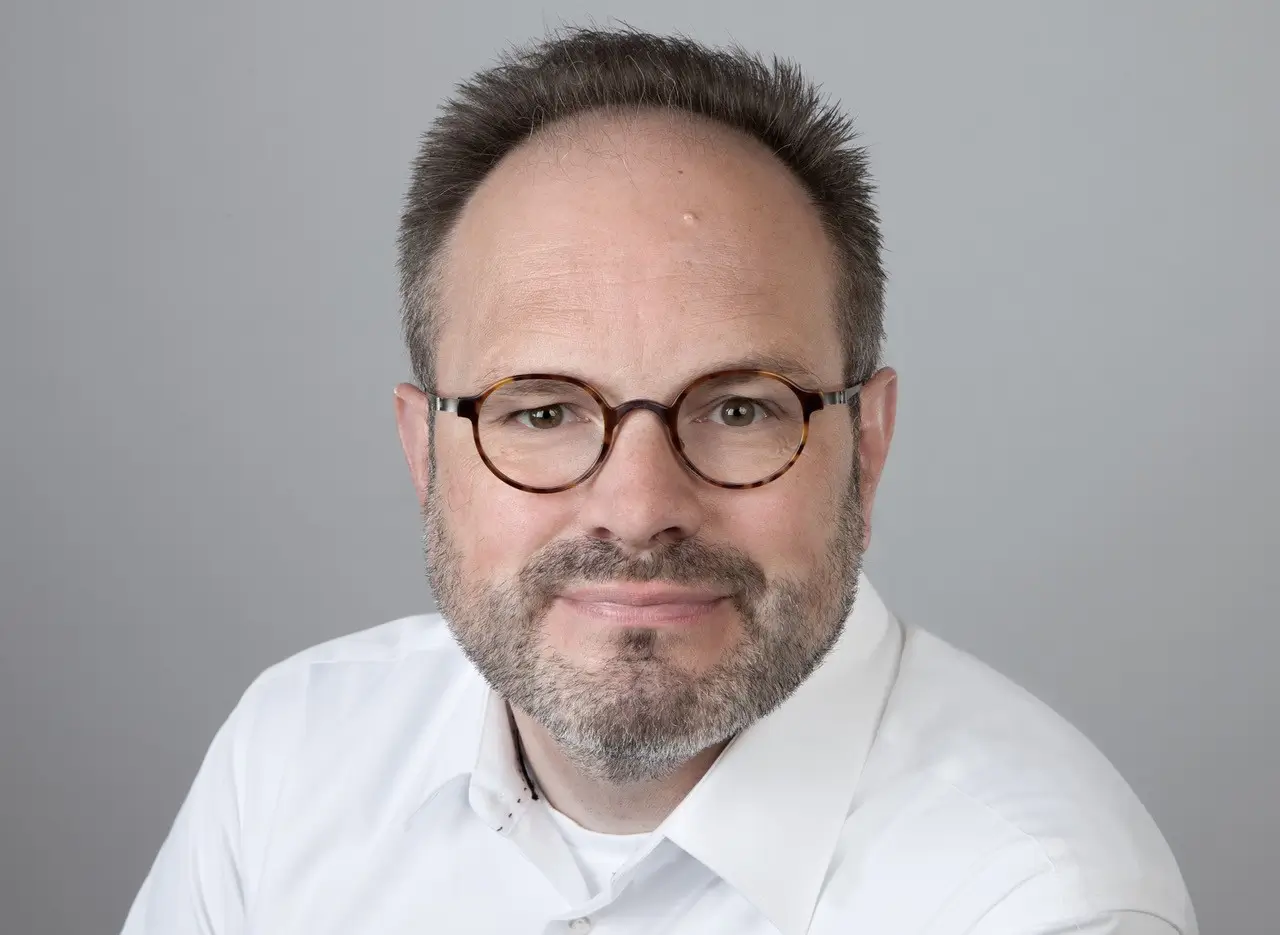
Frank Uekötter – Photo: Private
A new series of events organised by the LWL Museum Hellerlecht in Detmold and the Westphalian Library of Agriculture begins on 25 November 2026
Detmold (lwl). “Detmold Talks on Land and Agriculture – learning from yesterday for tomorrow”: this is the motto of a new series of events organised by the LWL Museum Hellerlecht in Detmold in collaboration with the Westphalian Library of Agriculture in Münster. The opening event on Wednesday (25 November) is entitled ‘Westphalia’s Pig. A History of Relationships’.
The distinguished guest speaker at the Museum of the Regional Association of Westphalia-Lippe (LWL) is Frank Uekötter, Professor of History at Ruhr University Bochum. He will explore the history and present state of pig farming in Westphalia.
Uekötter, born in Münster in 1970, has taught at institutions including Ludwig Maximilian University of Munich and the University of Birmingham. An internationally renowned expert in environmental and agricultural history, he has published numerous studies, including ‘The Truth Lies in the Field – A History of Knowledge in German Agriculture’ (2010), ‘Germany in Green – A Ambivalent Success Story’ (2015) and ‘Atomic Democracy – A History of Nuclear Energy in Germany’ (2022).
Uekötter’s guest lecture in Detmold provides an overview of the long and winding journey from the countless small sheds at the back of houses – which were a common sight even in large towns in the late 19th century – to the intensive farming practices of today. From an early stage, the pig was a commodity shipped over long distances to large abattoirs, but it was also part of a history of food self-sufficiency that extended into the second half of the 20th century. For many families, the pig kept behind the house was indispensable, and in times of crisis and war it became nothing short of a staple of survival.
The lecture also examines how animal diseases are managed. African swine fever, for example – which is currently causing concern amongst Westphalian pig farmers – appears in a slightly different light when one is familiar with the history of such threats. In this way, the lecture paints a panorama of a human-animal relationship that continues to shape us to this day – even if one does not like pork.
The event will be moderated by Dr Marie-Luisa Allemeyer, Director of the LWL Museum in Hellerlecht, and by Gisbert Strotdrees, a journalist and historian from Münster.
Detmold Talks on the Countryside and Agriculture“Westphalia’s Got Pigs: A History of Relationships”Wednesday, 25 November 2026, 6.30 pm In the Forum of the LWL Museum HellerlechtKrummes Haus, 32760 Detmold
Please register with the museum’s information office on 05231/706-104 or at infobuero.detmold@lwl.org.
Press contact
LWL Museum Hellerlecht
Lisa-Marie Möllering
Lisa-marie.moellering@lwl.org
Tel. 05231 706-110
LWL Press Office
Markus Fischer
markus.fischer@lwl.org
Tel. 0251 591-235
Westphalian Agricultural Library
Gisbert Strotdrees
strotdrees@muenster.de
Tel. 02501 988-353
Stiftung Landwirtschaftsverlag
Dr Ludger Schulze Pals
ludger.schulzepals@lv.de
Tel. 02501 801-6600
About the Westphalian Library of Agriculture and the Landwirtschaftsverlag Foundation
The Westphalian Library of Agriculture in Münster holds approximately 6,500 volumes of specialist agricultural literature spanning five centuries. The library is part of the Landwirtschaftsverlag Münster Foundation, which is active in the fields of science, education, art and culture, with a particular focus on agriculture, forestry and rural areas.
About the LWL Museum Hellerlecht
The LWL Museum Hellerlecht in Detmold illustrates how people in Westphalia-Lippe have lived, worked and organised their daily lives over the past centuries. The open-air museum covers more than 90 hectares of cultural landscape and features 120 historic buildings from across the region.
The LWL at a glance:
The Landschaftsverband Westfalen-Lippe (LWL) is a local authority association with 21,000 employees, serving the 8.3 million people in the region. The LWL runs 35 special schools, 20 hospitals, 20 museums and two visitor centres, and is one of Germany’s largest providers of support for people with disabilities. It thus carries out tasks in the social sector, in support for people with disabilities and young people, in psychiatric care and in the cultural sector, which are best undertaken on a Westphalian-wide basis. It is also committed to an inclusive society in all areas of life. The nine independent cities and 18 districts in Westphalia-Lippe are members of the LWL. They support and finance the Regional Association, whose remit is shaped by a parliament comprising 114 members from the Westphalian local authorities.